**MCP Servers: The Unseen Backbone for Advanced AI Agent Deployment** **H2: What Even IS an MCP Server, and Why Your AI Needs One (Beyond the Buzzwords)**
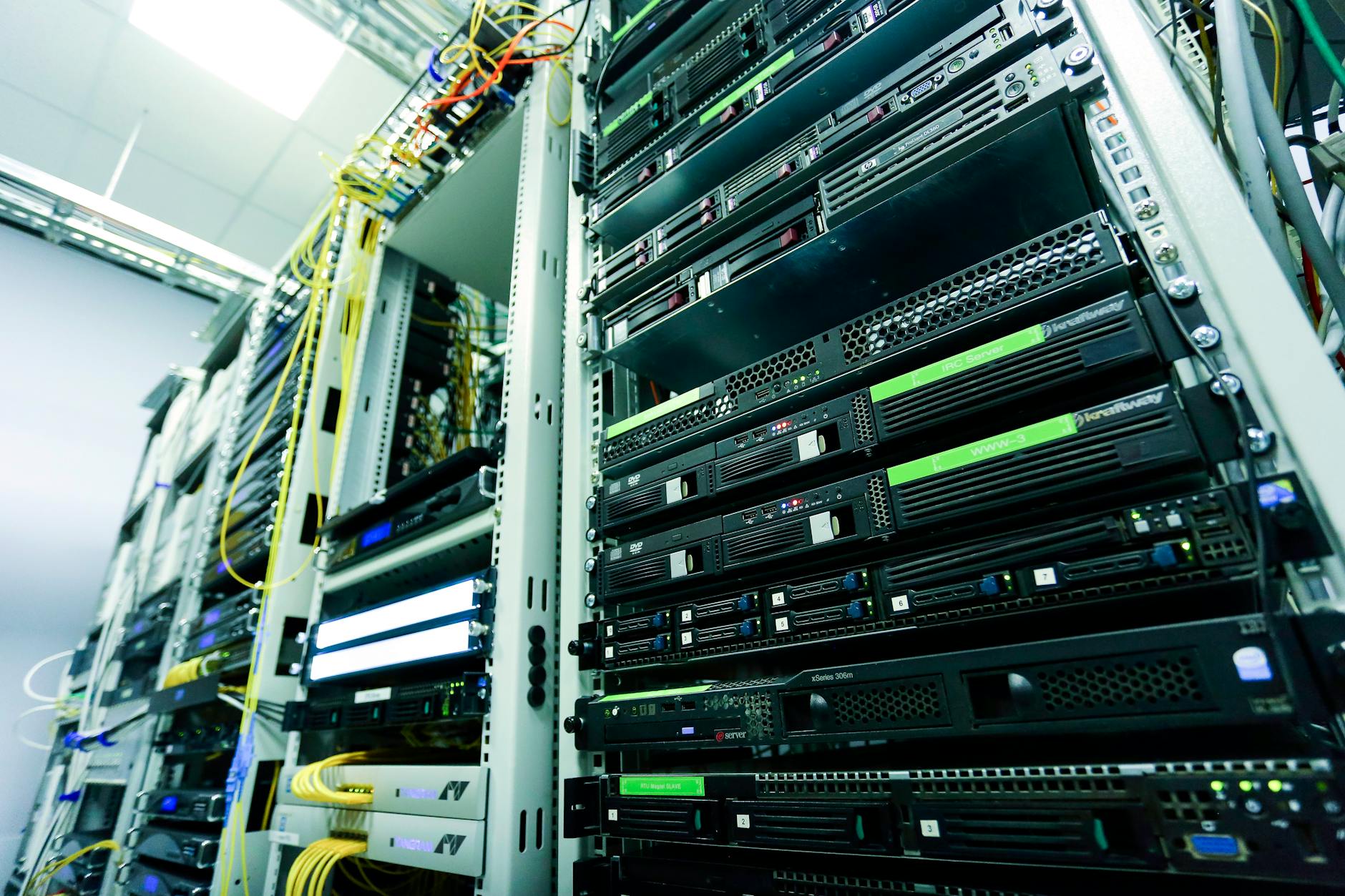
At its core, an MCP Server (often referring to a Massively Concurrent Processing or Master Control Program server, depending on context and vendor) isn't just another beefed-up cloud instance. It's a specialized, high-performance computing environment meticulously engineered to handle an immense volume of parallel operations simultaneously. Think of it as the ultimate orchestra conductor for your AI agents, where each agent isn't just a violin, but an entire section has its own complex score to play, often interacting with countless other sections in real-time. This foundational infrastructure provides the critical low-latency communication pathways, dedicated processing units (often GPUs or custom ASICs), and vast memory pools necessary to prevent bottlenecks, ensuring your advanced AI models can execute their intricate tasks, learn, and adapt without the frustrating lag or resource contention common in general-purpose servers. It's the silent workhorse that transforms theoretical AI capabilities into tangible, real-world performance.
So, why is this unassuming server type absolutely crucial for your AI's success, especially when moving beyond simple scripts to sophisticated, autonomous agents? Because traditional servers, while powerful, struggle with the sheer scale and interwoven dependencies of advanced AI. Imagine an AI agent needing to process live sensor data, query multiple databases, make complex decisions based on predictive models, and then communicate those decisions to other agents – all within milliseconds. An MCP Server, by design, excels here. It offers:
- Unparalleled Parallelism: Handling thousands, even millions, of concurrent threads and processes.
- Ultra-Low Latency: Minimizing communication delays between compute nodes and data sources.
- Optimized Resource Allocation: Dynamically assigning compute, memory, and I/O to demanding AI tasks.
Without this specialized architecture, your AI agents would be constantly waiting on resources, leading to degraded performance, inaccurate predictions, and a failure to meet real-time operational demands. It's the difference between a sluggish, reactive AI and one that is truly proactive, intelligent, and responsive.
The Google News API allows developers to programmatically access and retrieve news articles from various sources. It provides a powerful way to integrate real-time news into applications, websites, or research projects. This API offers filters for language, region, and keywords, making it highly versatile for custom news aggregation.
**H2: From Model to Muscle: Practical Tips for Deploying AI Agents on MCPs & Troubleshooting Common Roadblocks**
Deploying AI agents on Multi-Cloud Platforms (MCPs) requires a strategic approach, moving beyond mere containerization to optimize for performance, cost, and resilience. A key initial step involves selecting the right compute resources across your chosen clouds – considering not just CPU/GPU power, but also memory, network bandwidth, and regional proximity to data sources. Leverage serverless functions (e.g., AWS Lambda, Azure Functions) for event-driven, stateless agents, or opt for managed Kubernetes services (e.g., EKS, AKS, GKE) for more complex, stateful deployments requiring fine-grained control over scaling and resource allocation. Don't forget robust CI/CD pipelines to automate testing and deployment across your heterogeneous infrastructure, ensuring consistent agent behavior regardless of the underlying cloud provider.
Troubleshooting common roadblocks in MCP deployments often boils down to interoperability and data egress challenges. Ensure your agents are designed with cloud-agnostic principles, minimizing reliance on proprietary services where possible, or abstracting them with consistent APIs. Monitoring tools (e.g., Prometheus, Grafana, ELK stack) are paramount for identifying bottlenecks, resource exhaustion, or unexpected behavior across your distributed agents. Pay close attention to network latency and data transfer costs between clouds; optimizing data locality and employing intelligent caching strategies can significantly reduce operational expenses. Finally, implement comprehensive logging and tracing to pinpoint issues quickly, especially when dealing with agents that interact across multiple cloud environments.